

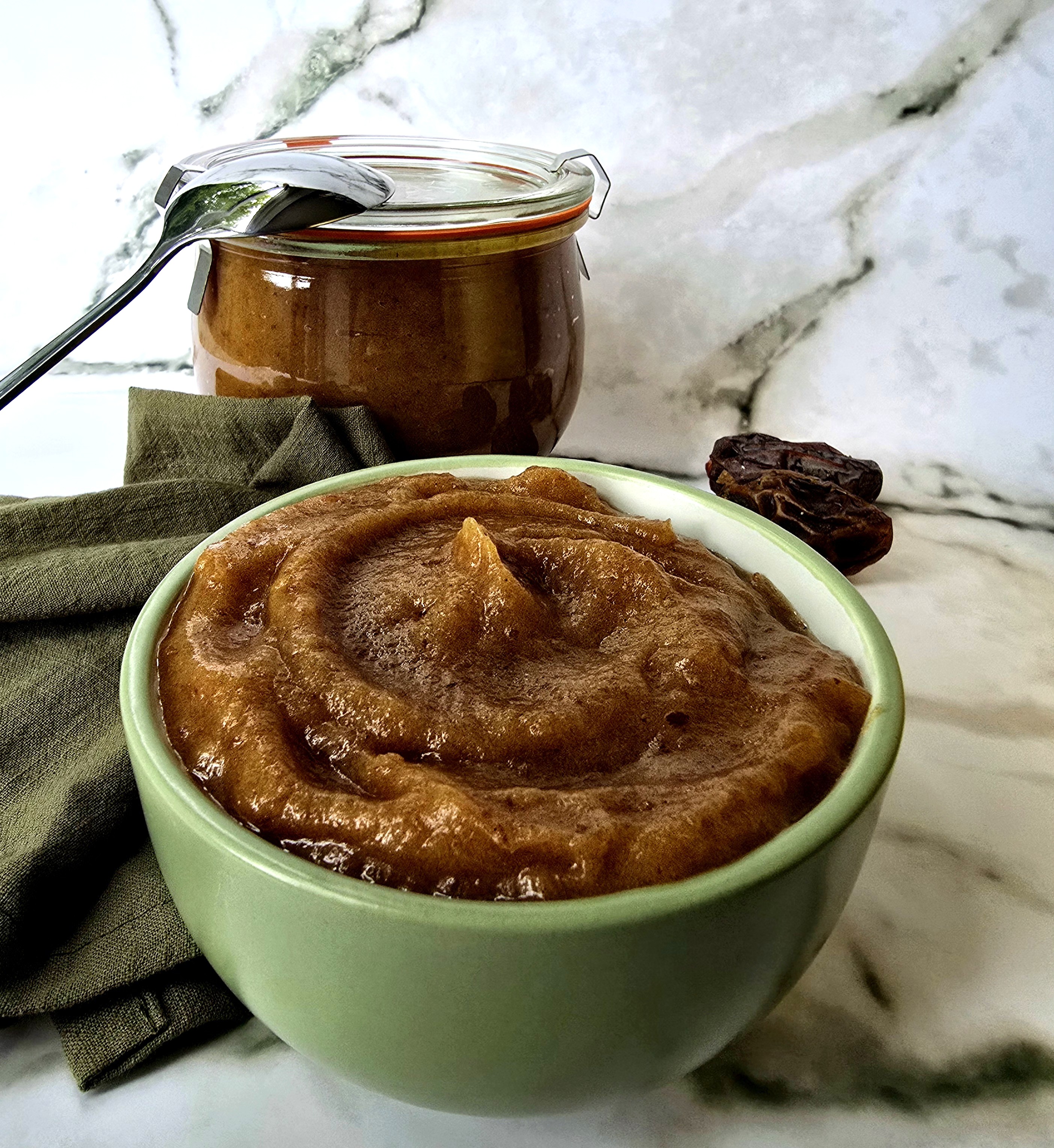
How to Make Date Paste – Healthy Sugar Substitute

Finding healthy alternatives to sugar can be a challenge, which is why this date paste natural sweetener is such a wonderful option. It’s not only nutrient-rich but also simple to make; in just minutes, you can create a delicious date spread to enjoy instead of jam.
We live in a world full of sugar, and this is the reality. It is in breakfast cereals, snack bars, sauces, drinks, gluten-free biscuits, “healthier” treats, and half of the things that look innocent on the supermarket shelf.
One of my missions on DeGlutenista Nutrition is to sweeten dessert recipes with natural sweeteners. Maple syrup, honey, coconut sugar, dates, and date paste all have their place, yet dates are still my favorite. They bring sweetness together with fiber, potassium, magnesium, copper, and natural plant compounds.
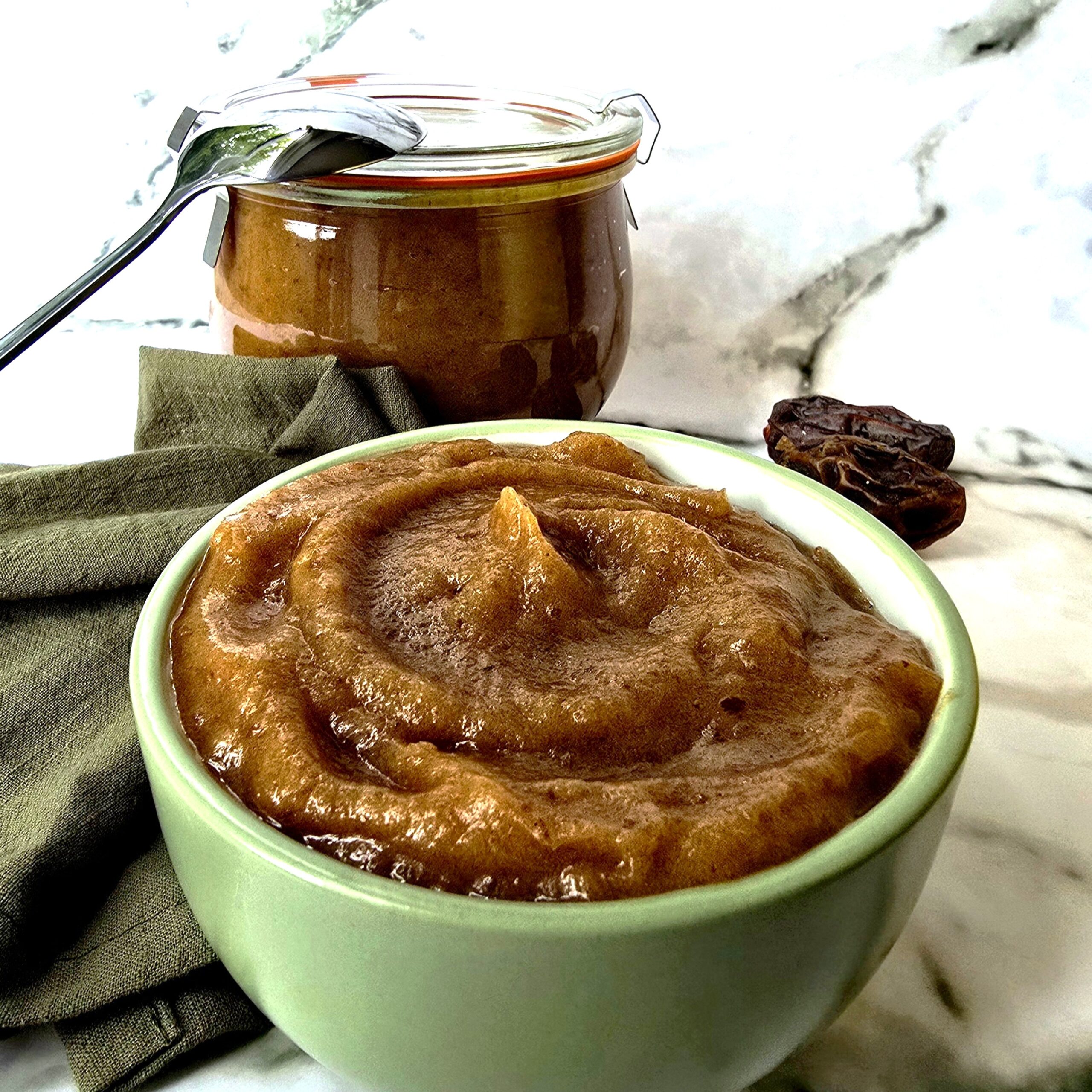
This 2-ingredient date paste recipe turns soft Medjool dates and water into a thick, caramel-like healthy sweetener for muffins, chia jam, smoothies, and no-bake desserts. It gives sweetness, flavor, and moisture, which is especially helpful in gluten-free baking.
Nearly all gluten-free muffin and cake recipes use this healthy sweetener. My gluten-free banana muffins turned out amazingly, just like the chocolate banana bread – with only date paste and bananas.
This post may contain affiliate links. If you make a purchase through these links, I may earn a small commission at no extra cost to you. I only recommend products I personally use and trust. Thank you for your support!
What Is Date Paste?
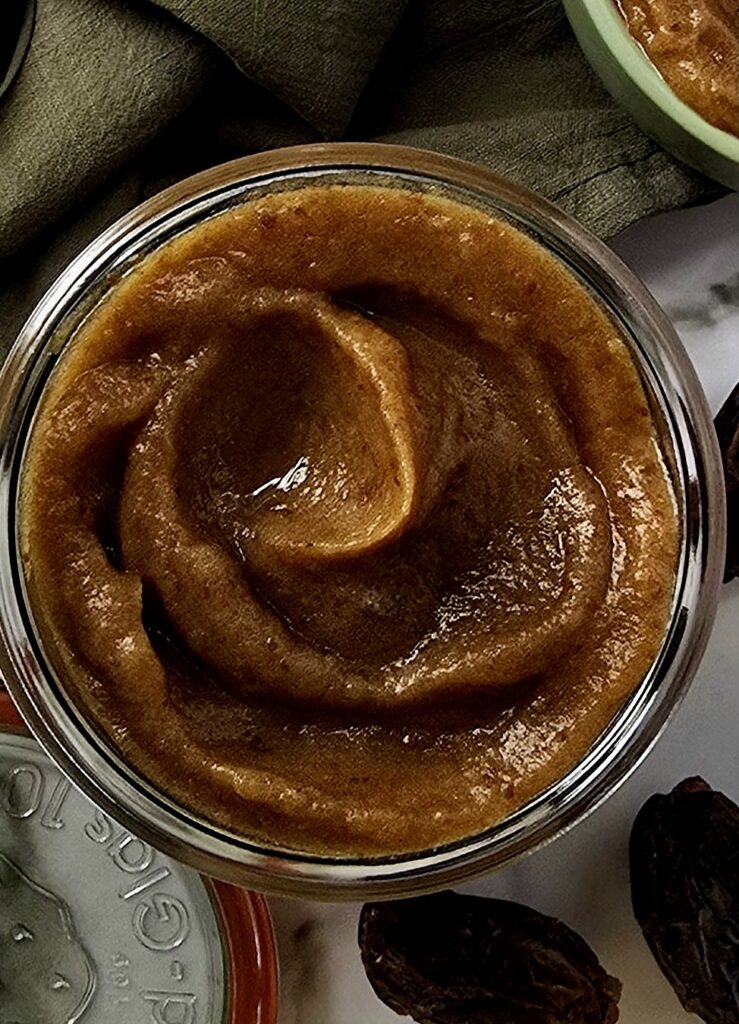
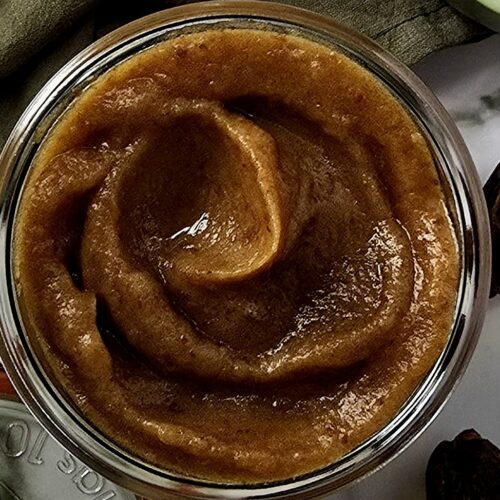
Date paste is a thick, smooth sweetener made from soaked dates and water. The dates soften, blend into a caramel-like paste, and become easy to stir into homemade desserts, breakfast jars, smoothies, sauces, and sweet spreads.
Medjool dates are my first choice because they are soft, sticky, and naturally rich. They blend more easily than drier dates and give the paste that deep caramel flavor I want in baking.
Why Dates Are Good for Your Health
Dates have been valued as food for centuries, and there is a reason they still make sense in a modern kitchen. They are naturally sweet, but they also provide fiber, minerals, and plant compounds that plain sweeteners leave behind.
Their fiber can support bowel regularity and help slow digestion, which is one reason dates feel different from using a stripped-down sweetener. The same fiber may also support heart health as part of an overall fiber-rich diet, especially when daily meals include plenty of plants, protein, and healthy fats.
Dates also provide minerals that are important for everyday bodily functions. Potassium supports normal muscle and nerve function. Magnesium, manganese, copper, and selenium all play roles in bones, connective tissue, antioxidant defense, and normal metabolism. Dates also contain a small amount of plant-based iron, which can contribute to overall iron intake as part of a varied diet.
For skin, I would look at dates through the same food-first lens. Copper supports normal connective tissue, while polyphenols and other plant compounds help protect cells from everyday oxidative stress.
Why I Use Date Paste as a Natural Sweetener
Sugar is everywhere, and I am not here to pretend we live in a sugar-free world. Glucose fuels our cells, and sweetness has its place. My choice is to use sweeteners that bring something more to the recipe.
I use date paste where its texture helps the recipes. It works best in soft bakes, chia jam, breakfast bowls, smoothies, yogurt bowls, and no-bake desserts because it blends into the mixture and gives a thicker, softer finish. From all the natural sweeteners I use, dates are still my favorite.
Date Paste in Gluten-Free Baking
In gluten-free baking, moisture can be very helpful. Some gluten-free flours and starches absorb moisture quickly, so a soft bake can feel drier once it cools. Date paste helps keep the crumb softer, as the blended fruit retains moisture and spreads throughout the batter.
When a recipe needs more spread, crisper edges, or a drier texture, coconut sugar is usually the better natural sweetener. It behaves more like a dry sweetener and keeps the mixture lighter. Date paste naturally moves the result toward soft, tender, and sometimes chewy, so I use it where that texture belongs.
When I adapt a recipe, I add date paste gradually and check the mixture before changing anything else. If the batter looks too loose, I add a spoonful more gluten-free flour, let it sit for a few minutes to thicken, or bake it a little longer until the center sets properly.
Blood sugar response depends on the full portion and the full recipe. Date paste keeps more of the date’s food structure, yet the amount used still counts. The article on glycemic index and glycemic load explains why quantity, fiber, and the rest of the meal shape the response.
Types of Dates
Click here if you want to learn more about date types
When discussing dates, you may still wonder, what, wait, which one do I have to buy or use? Not all dates are equal, and knowing which ones to use makes a real difference in flavor and texture.
Dates have gained popularity over the past few years. They come from the date palm tree, which grows in many tropical regions worldwide. Medjool, Deglet Noor, Barhi, and Halawi are the most popular types.
Medjool dates are the gold standard for this date paste recipe, thanks to their large size, rich caramel-like taste, and soft, sticky flesh that blends beautifully. I like to stock my kitchen with a big pack of Medjool dates, as I use them in nearly every dessert.
When fresh, Barhi dates are incredibly sweet and soft, almost like butterscotch, while Halawi dates are chewy and honeyed, making them ideal for a more subtle paste.
Deglet Noor dates are drier and smaller and are often used in baking or snacking. If you’re using these, you’ll need to soak them a bit longer and may need to adjust water ratios. I’ve tried them for the first time in Saudi Arabia, which is no surprise, given that the country is one of the top five producers of dates, alongside Egypt, Iran, Algeria, and the United Arab Emirates.
So, if you ever visit these countries, don’t miss the chance to stock up on this powerhouse dried fruit, direct from their sunny fields.
Best Dates for Date Paste
Medjool dates are my first choice for date paste because they give the smoothest texture and richest flavor. They are larger, softer, and more caramel-like than many other dates, which makes them easier to blend into a creamy paste.
Deglet Noor dates can work too, although they are usually drier and firmer. Soak them for longer and add the soaking water gradually until the blender can move through them properly. The final paste may be slightly lighter and less caramel-rich than Medjool date paste, but it still works in baking and breakfast recipes.
Whichever dates you use, always check for stones, even when the packet says pitted. One hidden stone can damage the food processor, and nobody needs that slop in the middle of a baking day.
Ingredients for Date Paste
Medjool dates give this recipe its smooth texture, rich sweetness, and caramel-like flavor. Choose dates that feel soft and sticky. Dry dates can still work, but they need longer soaking and may need more soaking water during blending.
Boiled water softens the dates and helps the blender turn them into a smooth paste. Keep the soaking water because it carries some of the date flavor and helps you adjust the texture.
Vanilla bean paste is optional. It adds a warmer dessert flavor, especially if you plan to use the paste in muffins, banana bread, yogurt bowls, or no-bake sweets. The basic recipe works beautifully with Medjool dates and water alone.
What You Will Need To Make Date Paste
The only ingredients for this nutritious sweetener are dates, water, and a food processor. There are two ways to make date paste that I know; there might be more, however 🙂
- Boil some water and soak the dates for 10-15 minutes.
- Alternatively, you can soak them overnight in room-temperature water. (I keep mine in the fridge)
And a pinch of love! That’s it! So, let’s make some date paste and enjoy your homemade, refined-sugar-free sweet treats without guilt.
- 18- 21 (500g) Medjool dates, pitted
- Filtered or boiled water (enough to cover the dates). Keep the soaking water to adjust the consistency or use it as a sweetener in other recipes.
That’s it! You can also enhance it with a splash of vanilla extract, a pinch of salt, or even a little lemon juice if you use it in citrus-based bakes.
Equipment
Step-by-Step Instructions
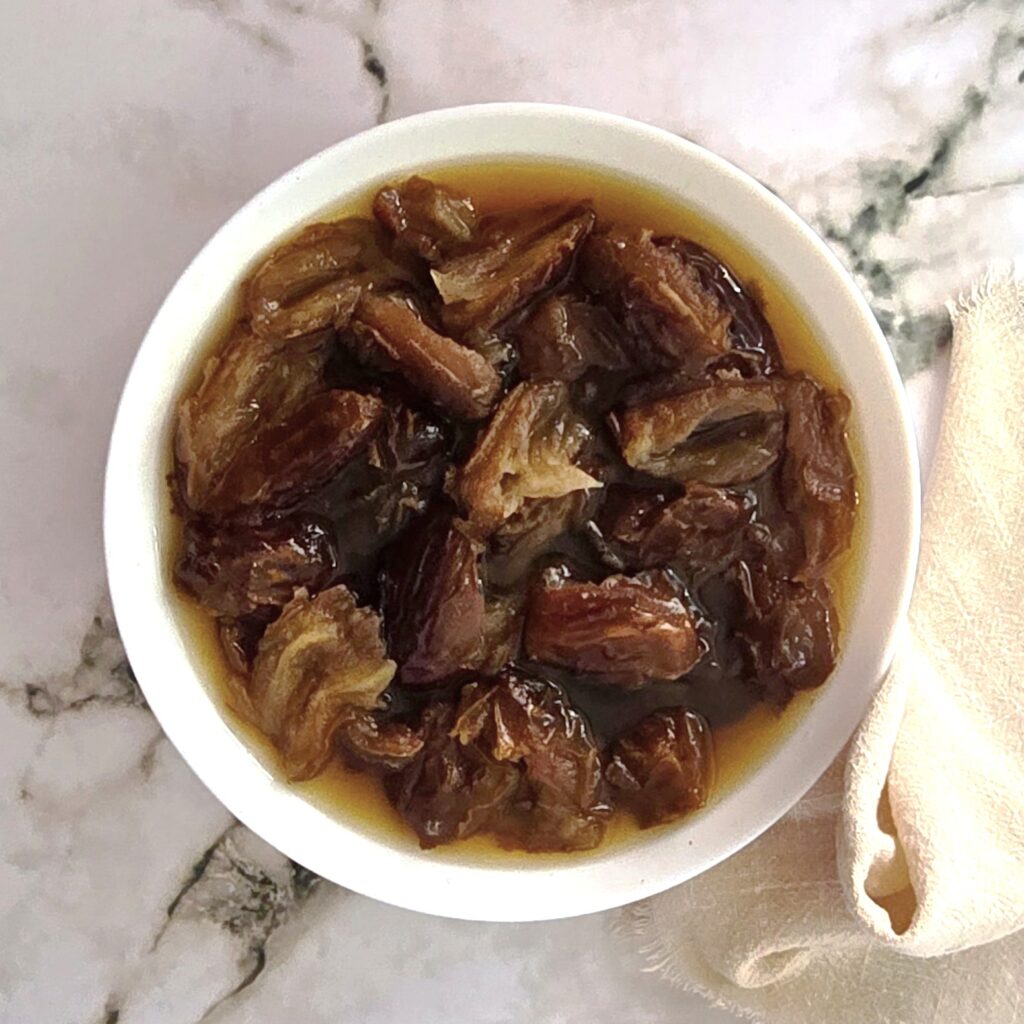
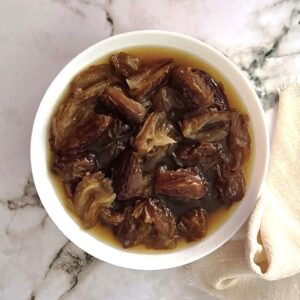
Soften the Dates: Remove the pits from the Medjool dates and place them in a heatproof bowl (if using the first method). Pour water over the dates until they are just covered, and let them soak for 10–15 minutes or overnight. Afterward, your dates should look like those in the image.
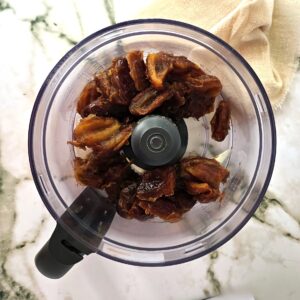
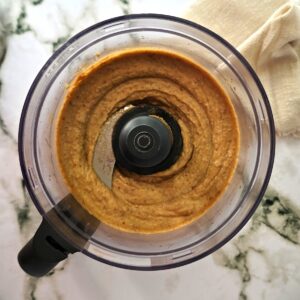
Blend: Transfer the softened dates to a high-speed blender or food processor with an S-blade. Do not squeeze them. Start blending. If your mixture is very thick, add a splash or two of the soaking water. Blend on high until completely smooth. Scrape down the sides as needed.
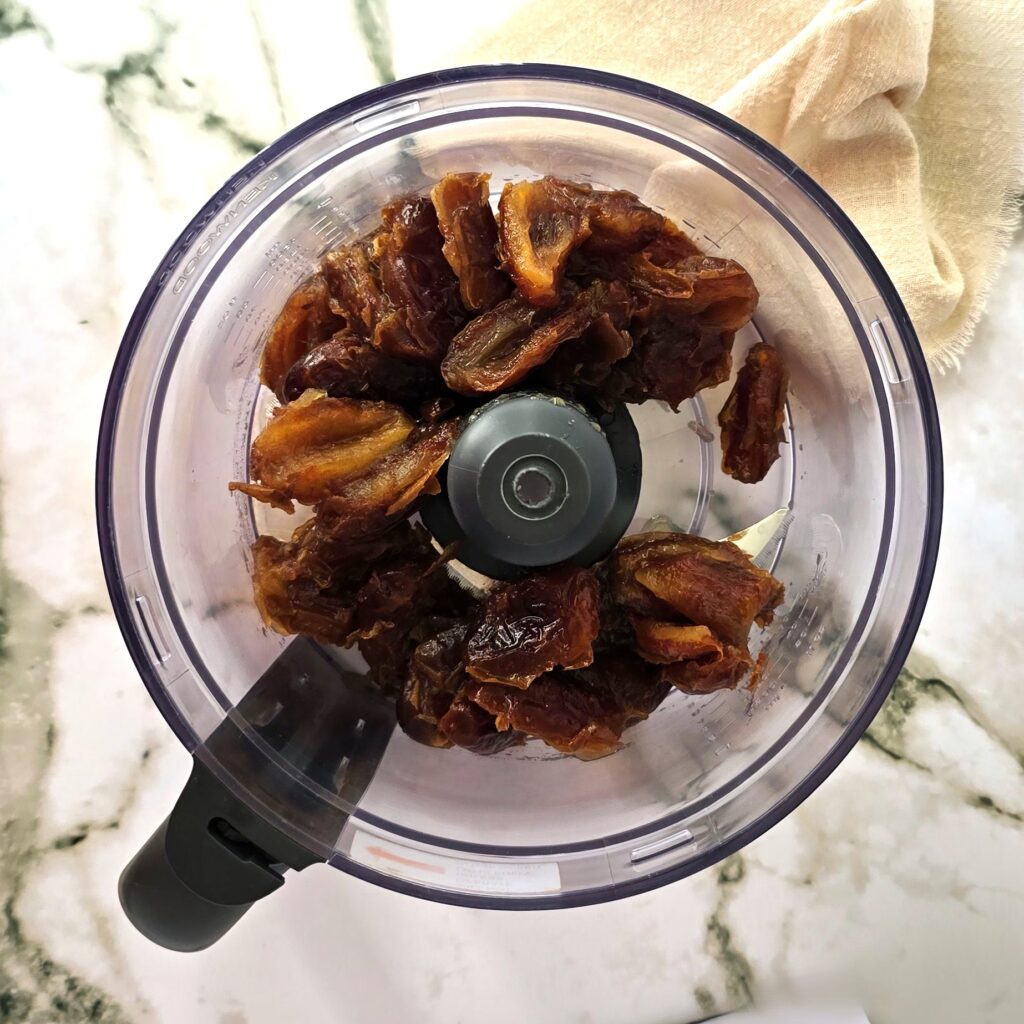
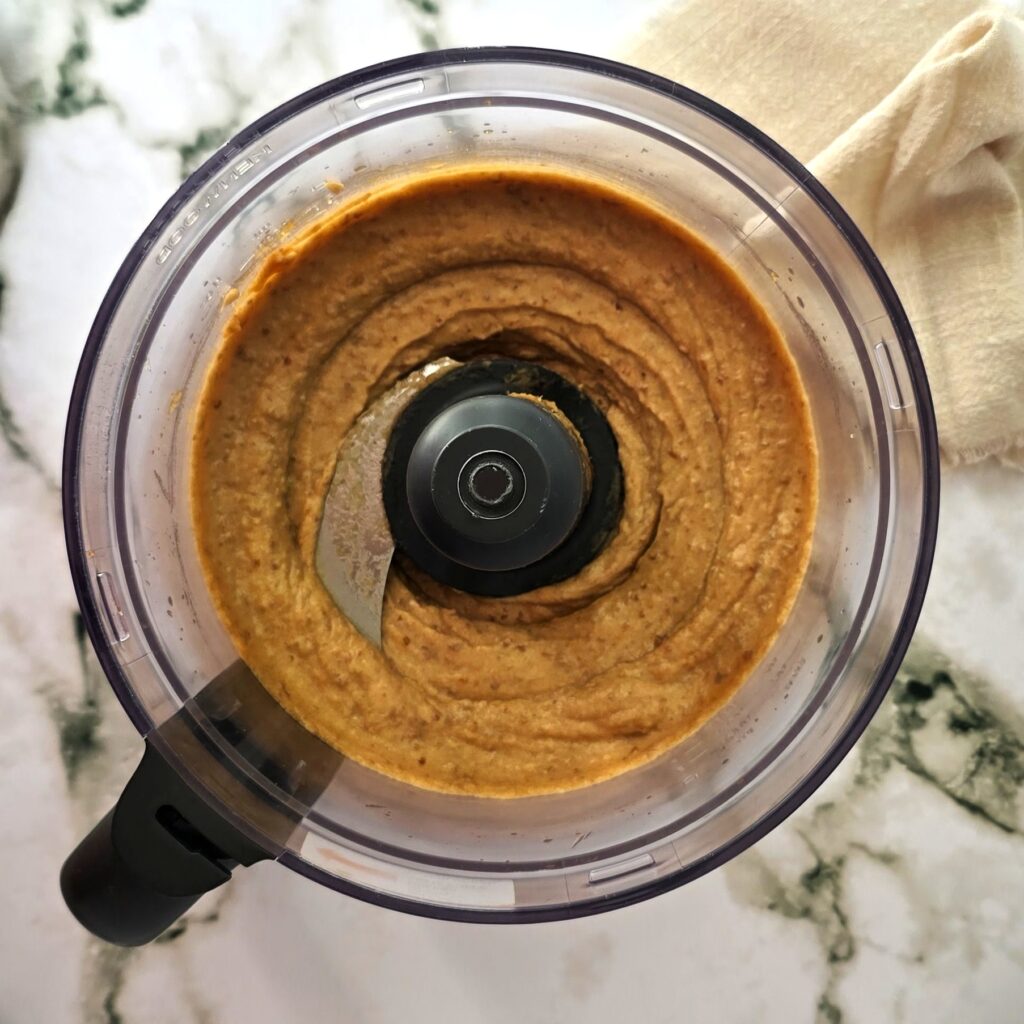
Adjust: To make a thinner paste (for smoothies or dressings), add more water, a tablespoon at a time. To make a thick, spreadable paste (ideal for baking), keep it denser.
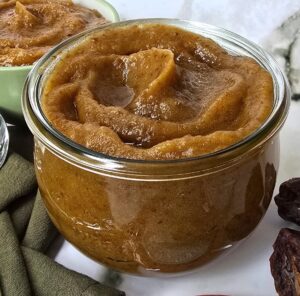
Store: Spoon the paste into a clean jar and refrigerate for up to 2 weeks. It also freezes well in silicone ice cube trays for single-use portions.
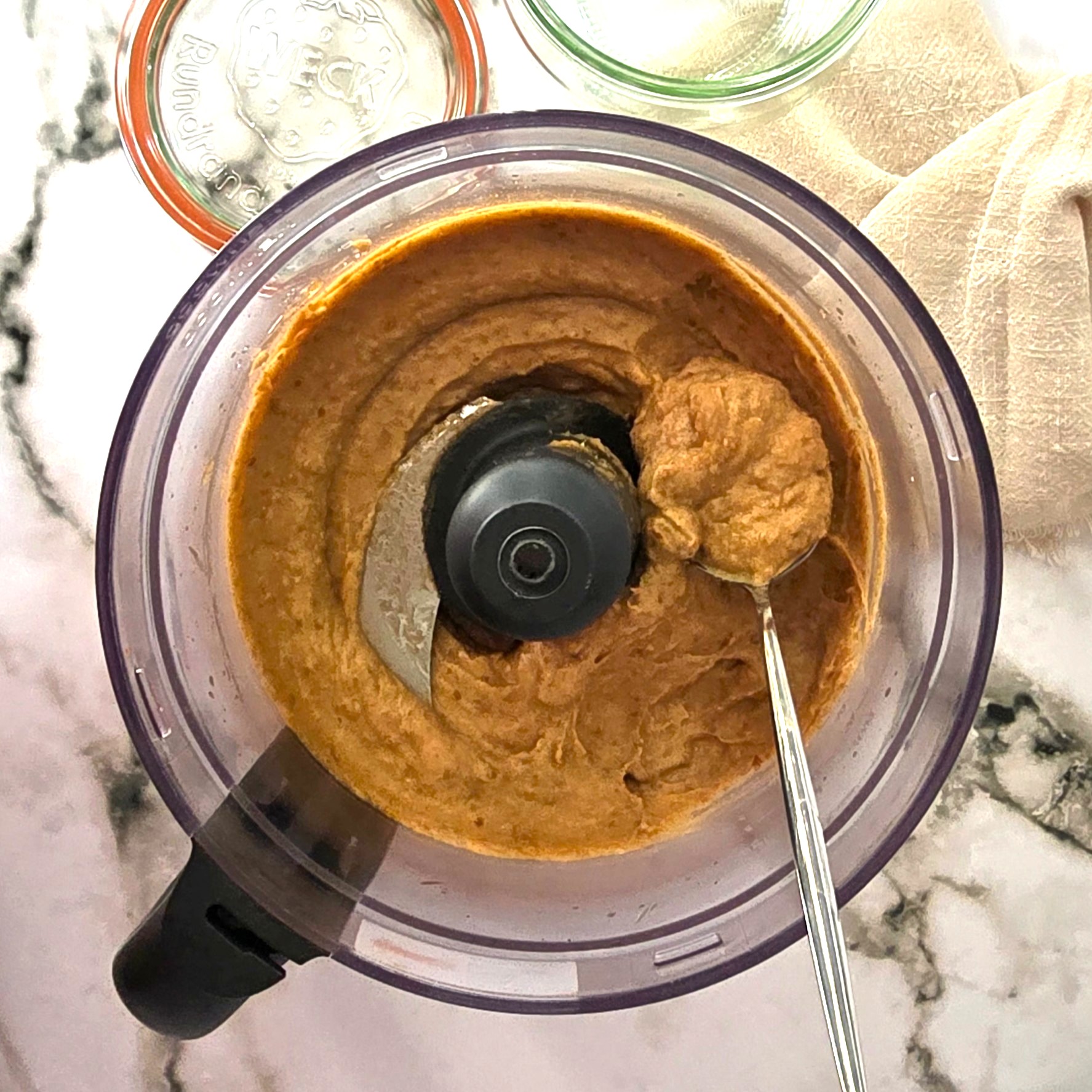
And, that’s it! This recipe yields roughly 600g of luscious, spreadable date paste. Enjoy as a spread or in countless recipes from this blog or whatever your imagination brings!
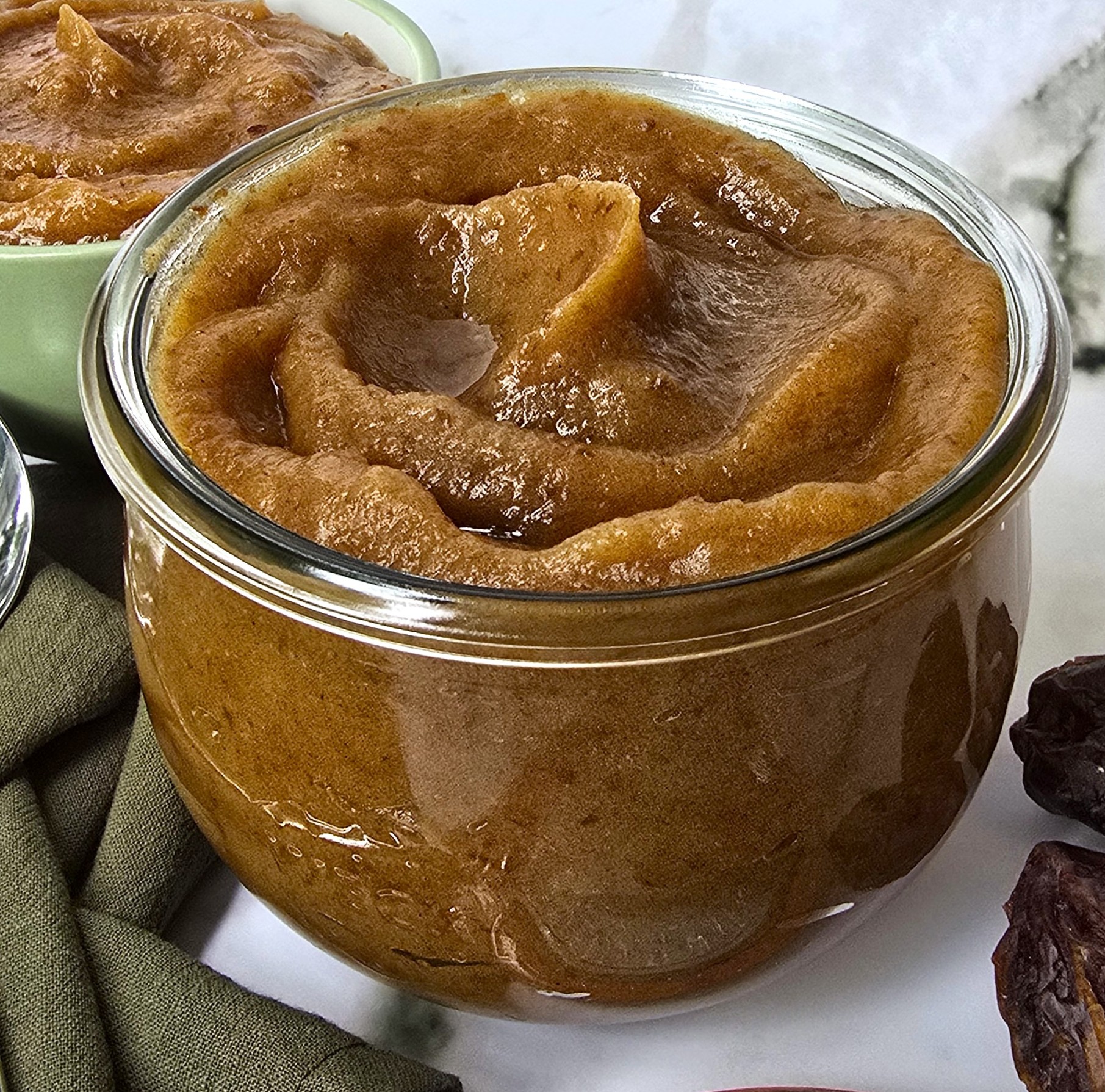
How Thick Should Date Paste Be?
The best thickness depends on how you want to use it.
For muffins, loaf cakes, brownies, soft cookies, and no-bake bases, keep the date paste thick. A thicker paste adds sweetness and body without loosening the batter too much.
For smoothies, yogurt bowls, chia pudding, overnight oats, sauces, or dressings, a softer paste is easier to mix through. Add the soaking water one tablespoon at a time until the texture feels right.
Date Paste vs Date Syrup
Date paste and date syrup both come from dates, but they work differently in recipes.
Date paste keeps the blended date pulp, so it has a thicker texture and keeps more of the fruit’s fiber. It works well when a recipe needs sweetness with body, such as muffins, breakfast jars, chia jam, no-bake bases, and soft bakes.
Date syrup is thinner and pourable. It works more like maple syrup or honey, so it suits drizzling, drinks, sauces, dressings, and recipes where a smooth liquid sweetener blends more easily.
How to Store Date Paste
Store date paste in a clean airtight jar in the fridge. Keep the lid closed properly so the paste stays soft and does not dry out.
For longer storage, freeze it in tablespoon-sized portions or silicone ice cube trays. This makes it easy to take out only what you need for muffins, chia jam, overnight oats, smoothies, or a small dessert batch.
Thaw frozen date paste in the fridge or at room temperature, then stir it before using.
Where to Use Date Paste
Date paste works well in recipes that welcome softness, thickness, and caramel-like sweetness.
A spoonful works beautifully in raspberry chia jam, where the dates sweeten the berries while the chia seeds thicken the juices into a fiber-rich spread.
For a soft gluten-free bake, gluten-free banana muffins use date paste with banana for natural sweetness and a tender crumb.
The same idea works in chocolate banana bread, where date paste sits beautifully with cocoa and ripe banana.
For breakfast, date paste can be stirred into gluten-free overnight oats when the fruit needs a little more sweetness, and the jar needs a richer flavor.
It also works in chia pudding because the thick paste blends into the mixture while the chia seeds do their magic in the fridge.
For a quick bowl, add a little date paste to yogurt, fruit, nuts, or seeds when you want sweetness that feels more connected to real food.
FAQs
What is date paste made of?
Date paste is made from soaked dates and water. I use Medjool dates because they are soft, sticky, and easy to blend into a smooth paste.
Is date paste healthier than sugar?
Date paste gives sweetness together with fiber, minerals, and plant compounds from the whole date. It is still concentrated in natural sugars, so portion size matters.
Can I use date paste instead of sugar in baking?
Yes, date paste can replace sugar in some recipes, especially soft bakes, muffins, brownies, breakfast bars, chia jam, and no-bake desserts. It changes texture, so it works better where a softer result is wanted.
Does date paste taste like caramel?
Medjool date paste has a deep caramel-like flavor. The flavor becomes richer when the dates are soft, fresh, and blended with only a small amount of soaking water.
How long does date paste last?
Date paste keeps well in the fridge in a clean airtight jar. For longer storage, freeze it in small portions and thaw only what you need.
Can you freeze date paste?
Yes, date paste freezes very well. I like freezing it in tablespoon-sized portions because it makes baking and breakfast prep much easier.
What is the difference between date paste and date syrup?
Date paste is thick because it keeps the blended fruit pulp. Date syrup is thinner and pourable, so it behaves more like maple syrup or honey.
Fancy a Freebie?
Subscribe to my newsletter
and get your FREE eBook with 7 delicious gluten-free desserts!
*We will only send you gluten-free, lactose-free, refined sugar-free emails; you can unsubscribe anytime. Read our Privacy & Cookie Policy.
How to Make Date Paste – Healthy Sugar Substitute

Equipment
Ingredients
- 500 g Medjool dates around 18-20 dates, pitted
- Water boiled, enough to cover the dates
- 1 tsp Vanilla bean paste optional
Instructions
- Remove the pits from the Medjool dates and place them in a heatproof bowl (if using the first method). Pour water over the dates until they are just covered, and let them soak for 10–15 minutes or overnight. Afterward, your dates should look like those in the image.

- Transfer the softened dates to a high-speed blender or food processor with an S-blade. Do not squeeze them. Start blending. Add some soaking water if your mixture is very thick.
- To make a thinner paste (for smoothies or dressings), add more water, a tablespoon at a time. Keep blending on high until completely smooth. Scrape down the sides as needed. To make a thick, spreadable paste (ideal for baking), omit the water.
- Spoon the paste into a clean jar and refrigerate for up to 2 weeks. It also freezes well in silicone ice cube trays for single-use portions.
Notes
Your Dani x x
Nutrition

Mention @deglutenistanutrition and tag #deglutenistanutrition — you’ll make my day! 🌿✨

About the Author: Dani
Gluten-Free Recipes | Gut Health | Metabolic Health
Hi! I’m Dani, a Human Nutrition graduate with a strong interest in gluten-free cooking, gut health, UPF-free, and whole-food living. Your visit means the world to me!
I share simple recipes, nutrition tips, lifestyle experiences, and insights into living with food intolerances.
